A Conversation with Picton’s Movement Expert
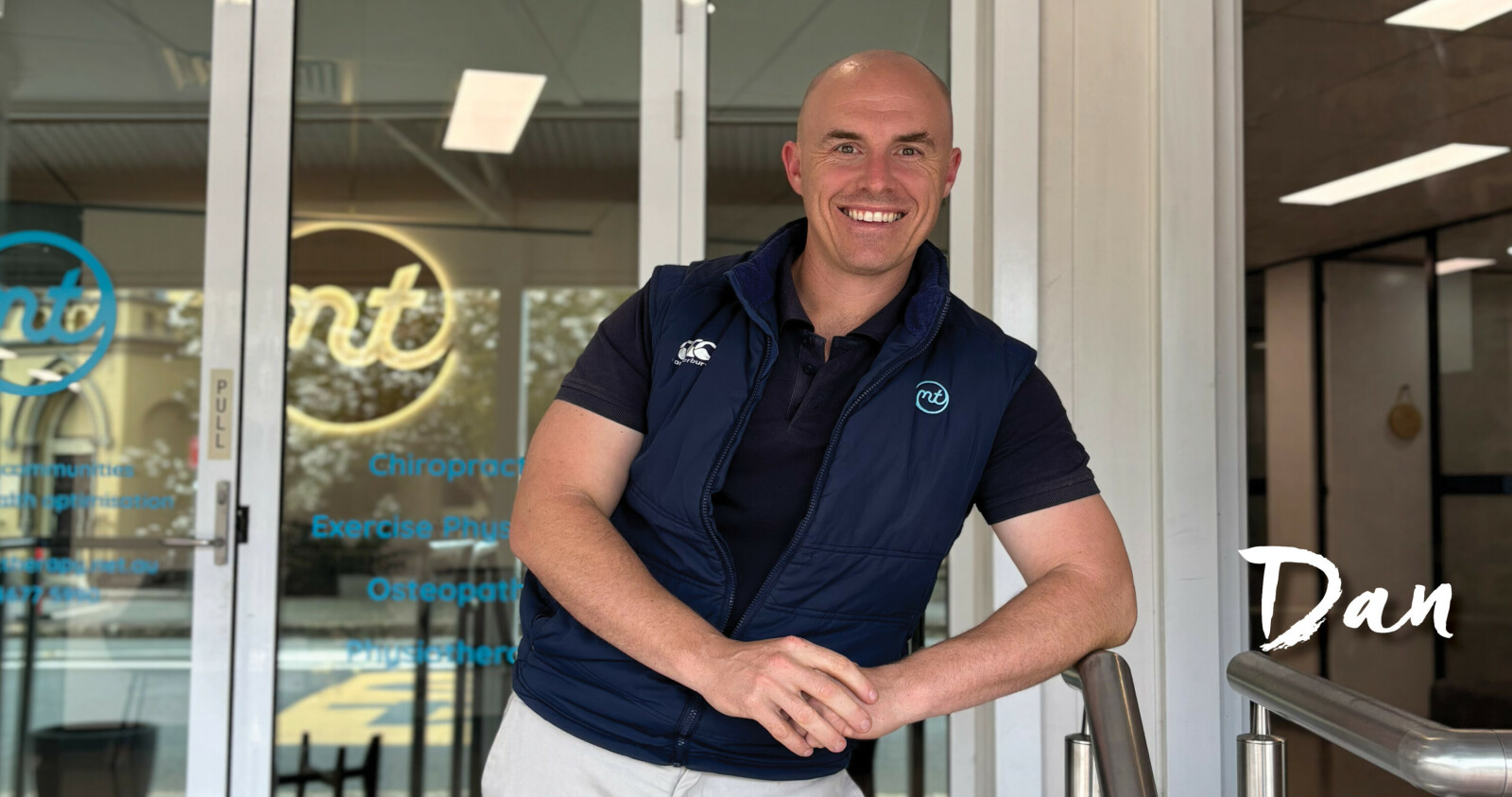
Meet Dan, the passionate owner behind Movement Therapy and The Hip Joint in Picton. With a dedication to improving movement, relieving pain, and supporting overall wellbeing, Dan has built his clinics into trusted destinations for health and recovery.
Learn about the services that make his business stand out, uncover the secrets behind its success, and learn about his commitment to making a real difference in the health care industry and the lives of the Wollondilly community.
Let’s start off with a little bit about you
I did not start out with a clear plan to work in healthcare. Like many people leaving school, I was exploring options and trying to work out where I fit. I eventually enrolled at Western Sydney University, studying Applied Science in Sport and Exercise Science, a pathway that leads to a qualification as an Exercise Physiologist. What drew me in at first was learning about the human body and how it responds to training. But very quickly what interested me most was not sport performance, it was health. I became more and more interested in the problems that shape people’s lives over years and decades; chronic pain, chronic disease, loss of capacity, and the slow drift away from good health that so many people accept as normal.
During university we had an assignment to design a business that solved a real problem. It could have been any service in any field, but I chose to focus on chronic health. The data was clear. Chronic health issues are one of the biggest challenges we face, and exercise and lifestyle are some of the most powerful tools we have to change that. For that assignment, I built a model for a nationwide preventative service, something like a “preventative hospital,” designed to support people across their whole health journey, not just when things have already gone wrong. That project did more than fulfil a subject requirement. It locked in the direction I wanted my life’s work to take. At the same time I was working as a personal trainer. That role showed me something important early. Even general exercise, applied consistently with real support, can make a big difference. When people are given clarity, structure, and a plan they can actually follow, their health changes.
That growing interest in the full health journey is what led me into physiotherapy. I wanted deeper tools to help people move from injury, pain, or poor health into better function, stronger bodies, and more resilient lives. Later, I explored medicine, thinking that becoming a doctor might be the best way to tackle chronic disease at scale. That experience was important, not because it changed my path, but because it confirmed it. I realised quickly that much of medicine is built around reacting once problems are already established. It does essential work, but it was not where I felt I could do my best work. I wanted to be in prevention, not just repair. I wanted to work in the space where people are supported before their health has fully broken down. That experience reinforced what I already felt. Allied health, movement, and lifestyle is where I belong. They are where people can still change direction.
What I enjoy most now is watching that change happen. Not just getting someone out of pain, but helping them understand their body, build better habits, and take real control of their health. Seeing someone move from “this is just how I am” to “I can actually change this” is still the part of the job that matters most to me.
Tell us about Movement Therapy
Movement Therapy exists to move communities towards health optimisation. A big part of that is helping people perform at life. “Performing at life” looks different for everyone. For some, it means picking up their grandkids without pain. For others, it is walking to the shops, looking after the yard, or getting through a workday without their body holding them back. And for some, it is chasing big goals like playing in a grand final, running long distances, or pushing their physical limits.
Whatever life looks like to you, our role is to make sure your health can keep up with it. We work with people across their whole journey. That might start with an injury, pain, or a health condition that is holding them back. It then moves into learning how to manage and improve that problem. But it does not stop there. Our aim is not just coping. It is helping
people move beyond their issue and into a level of health and performance that gives them more freedom, not less. That is where the ideas of performing at life and health optimisation come from.
People come to us with a wide range of needs. That includes short term problems like a stiff neck or sore knee, and long term challenges like chronic back pain, post surgical recovery, type 2 diabetes, multiple sclerosis, Parkinson’s disease, and other conditions that affect movement and quality of life. We work with people from young to old. What they usually have in common is that they want to get better, and not just return to where they were, but move beyond it.
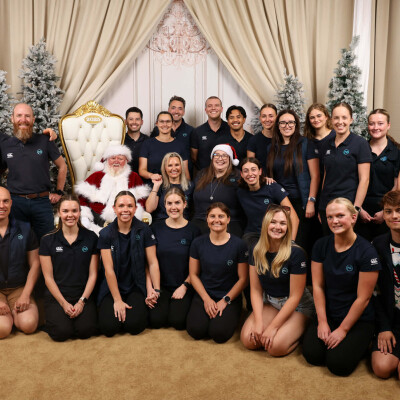
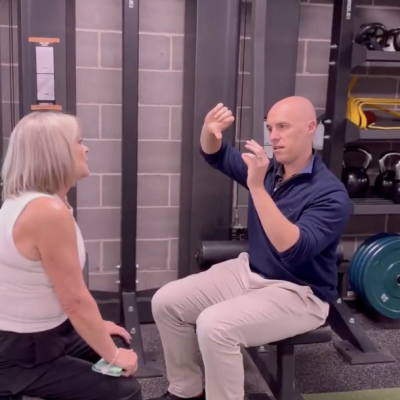
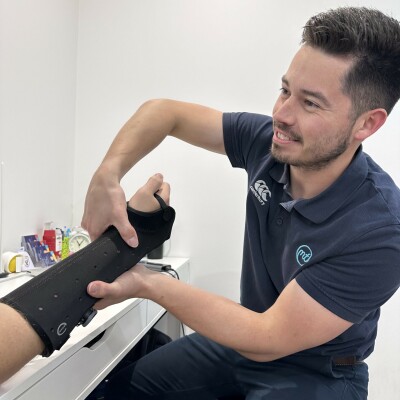
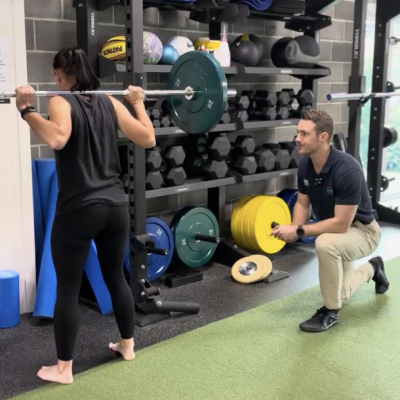
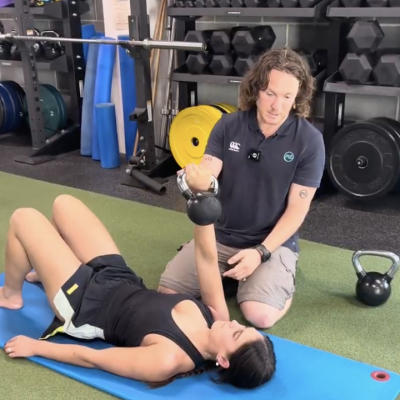
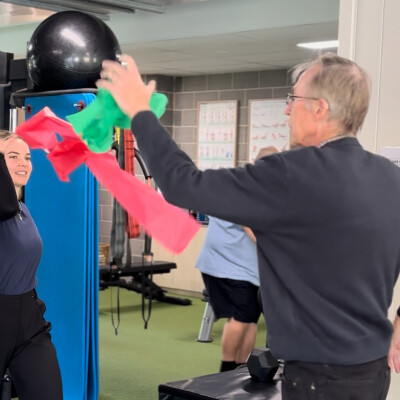
We provide care through physiotherapy, exercise physiology, chiropractic, osteopathy, and movement based rehabilitation, delivered through one on one and shared appointments. Our focus is always practical. Helping people move, train, live, and work in ways that support the life they want to live. Movement Therapy operates in Picton and Wollongong, with a team of over 50 people. That team ranges from physiotherapists, osteopaths, chiropractors, and exercise physiologists, to sports trainers, administrators, and baristas. Our facilities combine private consult rooms with large modern gyms, because movement is central to what we do.
This is only part of the journey. Over time, Movement Therapy will continue to grow into new services and products that support the same goal. Helping people perform at life, and helping whole communities move toward health optimisation, by design.
What inspired you to establish Movement Therapy?
Movement Therapy was not started because I thought I could do a better job as an individual therapist. It was started because I could see that our industry, as a system, was not built to deliver its full potential. What we do in allied health is powerful. Movement, exercise, and lifestyle can change lives. But in practice, I kept seeing the same pattern. Clinics were small, fragmented, and under-resourced. Therapists were often unsupported, underdeveloped, and moving from job to job.
Businesses were not structured in a way that allowed people to stay, grow, and build deep skill over time. And because of that, patients were not getting access to the full range of services, support, and progression that they actually needed to reach optimal health. The problem was not the therapists. And it was not the tools. It was the structure. So Movement Therapy was created to fix that. The goal was to build a business that could scale properly, not just in size, but in depth. A business that could support its people well enough that they could stay, grow, and become exceptional at what they do. And through that, give patients access to a much richer, more complete health journey. That meant building strong systems, processes, and pathways for staff development. Creating teams that could work together, not in isolation. Building services that could support people from injury and illness, through recovery, and into performance and long term health.
Over time, my own role changed as well. I moved from being mostly focused on direct patient care to being focused on building the environment around the team. My work now is about developing our people, designing systems, and creating the conditions where great care can actually happen consistently, not just occasionally. The vision behind Movement Therapy has always been the same. To move communities towards health optimisation. Not through one great clinician, but through a strong, well supported team and a business model that allows that team to flourish.
What inspired the opening of The Hip Joint?
The idea for The Hip Joint came directly from watching how people naturally used our spaces over the years. When we were operating out of smaller clinics, we noticed that people did not just come in for their appointment and leave. After shared appointments, gym sessions, or one-on-one consults, people would hang around. They would talk, sit, connect, and decompress. What stood out was that there was a real desire for connection, not just treatment.
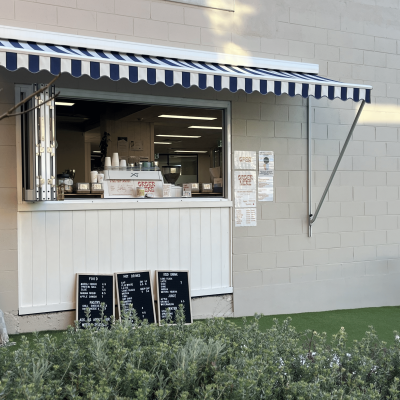
We realised that we did not want Movement Therapy to feel like a place people only visited for a booked slot and then rushed out of. Especially for people involved in longer-term care or shared appointments, we wanted them to feel like this was a place they could belong, not just attend. That is where The Hip Joint came from. We created it as a third space. Somewhere people could stay, sit, talk, work, or just be. A space that felt like their own, rather than a clinical waiting room.
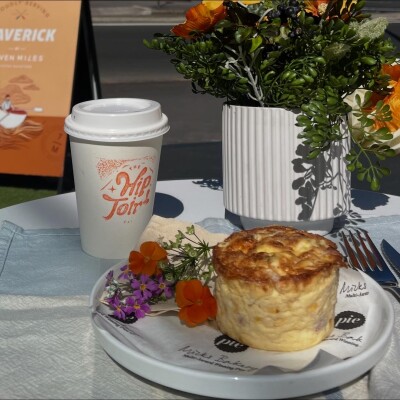
For members of our shared appointments program, we built this in deliberately by including free coffee as part of their care. It encourages people to arrive early, stay after, and connect with others going through similar journeys. We also give away a lot of coffees more broadly, because the point was never the coffee itself. The point was what happens around it. Social isolation is a significant issue for health and wellbeing. The evidence is clear, and we see it every day, particularly in communities like Wollondilly. The Hip Joint was created to directly address that problem. Connection improves adherence, motivation, mood, and long-term health outcomes.
By giving people a place to connect, we reinforce positive habits. People train together, talk together, support each other, and that makes it easier to keep showing up for their health. It becomes a positive reinforcement loop. The Hip Joint is not a café attached to a clinic. It is a deliberate extension of how we think about health. Health does not just happen in an appointment. It happens in community, connection, and the spaces people feel comfortable enough to stay in.
What’s the story behind the name Movement Therapy?
The name Movement Therapy came from a very practical realisation. No matter what letters are after someone’s name, physiotherapist, chiropractor, osteopath, exercise physiologist, sports trainer, we are all working with the same core thing: movement. We did not want a name that separated professions; we wanted one that connected them. In our clinics, we do not see our chiros as different to our physios or our osteos as separate from our exercise physiologists. We see everyone connected through movement. That is why we use the term movement therapist. It is not about replacing professions, it is about unifying them around what actually matters.
Long term, we are trying to build something bigger than a clinic name. We want “movement therapist” to become a recognised, high-standard identity. Like a chartered accountant or a barrister, someone who has trained deeply, understands multiple disciplines, and can guide people through their health using movement as the foundation. Our industry is very fragmented. Different boards, different titles, different tribes. That
fragmentation creates confusion for the public and limits what teams can build together. Movement Therapy is our attempt to move in the opposite direction. To build something that unites, rather than divides.
The name also reflects how most people experience health. People usually do not notice their health through blood tests or scans. They notice it when they cannot do things. When they cannot walk far, lift, play, work, or live the way they want. Movement is the signal. It is how people feel health in their body. And finally, Movement Therapy is not meant to stay inside one box. Over time, it will connect with nutrition, psychology, medicine, recreation, and more. Because at the centre of health, and at the centre of community, is movement. It is how people connect, train, play, recover, and grow together. That is why our centres are called Movement Therapy. Not because it sounds nice, but because it describes what we are trying to build. A unified, movement-centred way of improving health, for individuals and for communities.
Who or what has had a significant influence on your journey as a health professional and in building Movement Therapy?
My journey as a health professional and in building Movement Therapy is hard to separate. Both have been shaped by the people I have worked with, the environments I have been part of, and the ideas I have been exposed to along the way. I started in health as a personal trainer, working with everyday people who wanted to move better and feel better. That early stage showed me how powerful simple movement can be when it is supported well, and how much trust people place in the person guiding them. When I first qualified as a physio, I worked in an environment that nearly pushed me out of the profession. I did not feel inspired, and I did not see the kind of outcomes I believed were possible. That experience mattered because it showed me clearly what I did not want to become. Later, working alongside a team who cared deeply about their work showed me what this profession can be at its best. It also made me realise how much more I still had to learn. That experience kept me in the profession and pushed me to keep growing.
Over time, I was influenced by many people across health, movement, and lifestyle who challenged traditional thinking and showed me that health is something that is built, not just repaired. But the strongest influence has always been the people I have worked with long term. Some
of my colleagues have been with me since the beginning. Building, learning, failing, and growing together has shaped both who I am as a clinician and how I guide Movement Therapy.
I do not really think in terms of “owning” a business. Once something involves this many people, it stops feeling like something you own and starts feeling like something you are responsible for. It becomes more like a living system that you try to understand and support. I may have started Movement Therapy and set its early direction, but now my role is more about stewardship, building the systems, culture, and support that allow the people inside it to do their best work. If you are reading this and nodding, you probably know who you are. Many people have shaped this journey, even if they are not named here.
Looking back, there has not been one single influence. It has been a long line of people, environments, mistakes, lessons, and slow progress. All of it has shaped the same belief. That great outcomes do not come from individuals alone. They come from teams and systems that allow people to grow.
What do you believe sets Movement Therapy apart from other allied health practices?
What sets Movement Therapy apart is not just what we do, but how we are built to do it. A lot of clinics rely on a few good people working very hard inside systems that do not really support them. Over time, that limits what patients can access and what therapists can become. We built Movement Therapy differently. The business itself is designed to help our people stay, grow, and get better at what they do. That means better care for patients, not just today, but long term.
We are not built around one profession or one way of thinking. We are built around movement. That allows physiotherapists, chiropractors, osteopaths, and exercise physiologists to work together as one team, rather than as separate silos. Clients do not get bounced between titles. They get supported through a clear journey from problem, to progress, to performance.
We also care deeply about the whole journey, not just the first few weeks. Many places are very good at getting someone out of pain. Fewer are built to help someone move beyond that and build long term health, strength, and confidence. Our model is designed to support people through that full process, from dealing with an issue, to managing it, to moving past it
and performing at life.
Another difference is how much we invest in our team. Our therapists are not expected to just “figure it out” on their own. We build training pathways, feedback systems, and development structures so people can grow in skill and confidence over time. When the team grows, the care grows with it.
Clients often tell us they feel the difference. Not just in the treatment, but in the clarity. They know where they are going, why they are doing what they are doing, and how it fits into their life. That combination of strong people, strong systems, and a clear long term vision is what makes Movement Therapy different.
What has been your proudest moment or biggest accomplishment so far?
My proudest moment with Movement Therapy was in 2022, when we moved our Picton clinic into its new space.
Starting in Wollongong was an amazing milestone, but the Picton move hit differently. We had spent the whole day setting everything up, cleaning, moving, fixing, and making sure every detail was right. That night, after everyone else had gone home, I stayed back late organising things so everything would be ready for Monday. When it was finally done, I walked around the space on my own. It was quiet. Empty. Finished. And it hit me.
Not just what the building was, but what it represented. Years of work, mistakes, learning, people coming and going, people staying, patients trusting us, staff growing, systems slowly getting better. All of it sitting there in walls, rooms, light, and space.
I remember standing there feeling proud, grateful, and a bit overwhelmed. Not because it was perfect, but because it was real. It was something that had been built, slowly, with a lot of people, a lot of effort, and a lot of belief. That moment stayed with me. Not as a finish line, but as proof that what we were building was becoming something solid, something that could hold people, grow people, and help a lot of lives.
Why did you choose Wollondilly?
It honestly started quite simply. I was driving with a friend who was looking to expand his own business, and we noticed an empty space on the corner of Margaret and Colden Street in Picton. There was no big strategy at the time. It was just an opportunity that popped up, and it felt like the right one to take.
With my business partner at the time, we decided to go for it. I was lucky enough to know the landlord, the late John Corbett, who had worked with my dad, and that made the move possible.
Once we were in Picton, it became very clear that Wollondilly needed more support around health. There were a lot of people dealing with long term issues, and not many services built to help them move beyond just coping. That confirmed we had made the right choice.
There was also a personal connection. I grew up in Camden, and Picton was always just the town over the hill. It felt close to home. Since then, Wollondilly has grown with us. We outgrew that first space and moved into the Diggers building in the middle of town, creating a much larger facility. And now we are already looking for more space so we can keep supporting more people as the community grows.
As we continue to expand and help other areas, I hope that one day, after we have made real progress toward solving chronic health problems in Australia, people in Picton and Wollondilly can look back and say, “That’s where Movement Therapy started.”
What do you love most about being part of the Wollondilly community?
What I love most about Wollondilly is that it still feels human. It is big enough to grow, but small enough that people know each other, look out for each other, and care about what is happening around them. You see the same faces. You hear the same stories. You feel the impact of what you do, not in numbers, but in people.
There is a genuine respect here for care. When you help someone in Wollondilly, they let you know it matters. People say thank you. They stop you in the street. They remember you. That is something I have not felt everywhere I have worked before. There is still a strong country town mentality. It shows up in simple ways. People bring in cakes or biscuits. At Christmas, they drop in gifts. Not because they have to, but because
they want to show appreciation. It is not about the gift, it is about what it represents. You can walk down the street and say hello to people and mean it. People are open, genuine, and connected. They care about their town, their families, and the people around them.
Wollondilly also has a strong sense of pride. People care about their schools, their sport, their work, and their local businesses. When something is built with good intention, the community shows up for it.
Health is not an abstract idea here. People work hard. They use their bodies. They juggle jobs, families, land, sport, and long commutes. Health affects whether you can live the life you want. Being trusted with that is something I do not take lightly. What makes it special is not just the place. It is the people who let you become part of their story. Watching families grow, seeing people through injuries, setbacks, wins, and changes
over years, that is what makes Wollondilly feel less like a location and more like home.
Aside from your own, which local businesses do you love and support?
There are local businesses I support personally, and then there are businesses that Movement Therapy works closely with as part of caring for the community. Both matter, but they are a little different.
On a personal level, one of my favourites is Pheasant’s Nest Produce. Jamie and Lee have built something really special. Access to good quality fruit and vegetables is fundamental to good health, and what they provide to the local area makes a real difference. I have known them for many years and genuinely love what they do. In Picton, it would be hard not to mention the George Pub. It is more than just a pub. It is a place where people connect, catch up, and feel part of something. That idea of connection is why we also built The Hip Joint café, not just for coffee, but to give people a place to belong, a third place where they can connect, especially when social isolation is such a growing issue.
From a Movement Therapy perspective, we are lucky to work with a wide range of local businesses and services every day. That includes places like The Office Place in Picton, everyday services like the Tahmoor Laundromat, and most importantly, our local GPs across Wollondilly. They are under huge pressure with demand and still show up every day to care for the community. We work closely with many of them to support shared patients and get better outcomes.
We also work closely with many local gyms, studios, and recreational facilities. That includes Serenity Healing, Gymtastics, F45 Training, Table Vale Judo, Overtime Gym, I Am Pilates, the Wollondilly Leisure Centre, Raw Courage, and many others.
Together, all of these businesses and services form a growing health and community network across Wollondilly. It is great to see that network getting stronger, and we hope to keep working with even more local businesses as the area continues to grow.
Complete this sentence: Most people wouldn’t know that I...
Was a not-for-profit marriage celebrant for about 10 years.
And just for fun…what was your first job?
My first job was working in a Thai restaurant in Camden called Joy’s Thai. It was a family-run business, and that shaped how I understood work from very early on. They had an incredible work ethic. They worked long hours, and it was tough. Watching them, and also growing up with a dad who owned a small business, meant I learned early what it really takes to build something. Long days, consistency, and showing up even when you are tired. But it was not just hard work. It was very team oriented.
That first job taught me two big things. Work can be hard and still be meaningful. And when people feel part of a team, they will give more, care more, and build better things together.
Do you have any exciting plans, new services, or long-term goals for the future of Movement Therapy?
Yes, big ones. If we are serious about solving the chronic health problem in Australia, we need scale. That means more clinics, bigger spaces, and better systems that allow great teams to do great work in more places.
Our current clinics are only the beginning. In many ways, they will end up being our smallest versions. We already have plans to grow into larger spaces, to expand what we offer, so we can support more people in more ways.
In Wollongong, we are also looking at moving into bigger facilities that allow us to deliver the full Movement Therapy model at a much larger scale.
Beyond that, the goal is to grow into other regions. Not just opening clinics for the sake of it, but building strong teams, strong systems, and strong cultures that can genuinely help communities move toward health optimisation. The plans are big, but the reason is simple. The problem is big. And if we want to be part of solving it, we have to think and build at a scale that matches it.
Where do you see yourself in 10 years?
In 10 years, I see Movement Therapy with real wind behind it, a proven model, strong leaders, and the ability to scale across multiple regions.
For me personally, my role will continue to shift away from being in the middle of everything and toward stewardship. Setting direction, developing leaders, protecting culture, and making sure what we build stays true to why it started. If in 10 years Movement Therapy is a place where people spend real time, training, learning, eating well, connecting, and building health, and if communities can genuinely say they are healthier because we are there, then I will know we built something that mattered.
Is there anything else you’d like to share about yourself, your practice, or your journey in Wollondilly?
More than anything, I just want to say thank you. Thank you to the Wollondilly community for trusting us, supporting us, and allowing us to
practise what we love. Building Movement Therapy here has been an incredible opportunity, and it only exists because people opened their doors, shared their stories, and believed in what we were trying to do.
This work is genuinely my passion and my life’s work. But it is also something that belongs to more than just me. It belongs to the team who show up every day, and it belongs to the community that has welcomed us in.
I love Wollondilly. I love what it has given me, and what it has given our team. And I hope that, in one way or another, I stay connected to this community for the rest of my life.